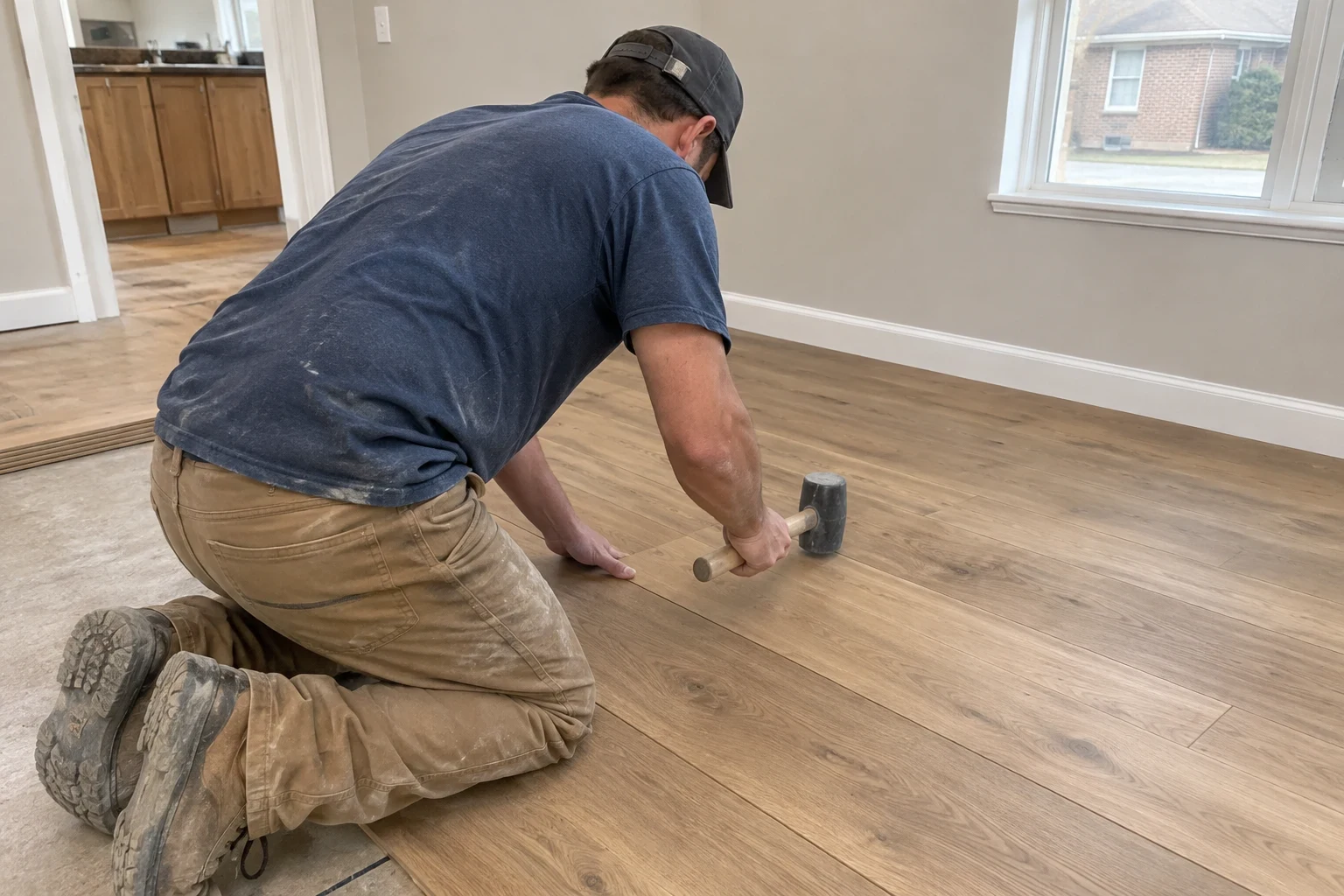
ServicesFlooring Installation
Gastonia Flooring Installation
Hardwood, engineered wood, luxury vinyl plank and tile go into new builds and remodels with us. First we test the subfloor for moisture and weak spots, so water left from an old leak or a storm can't wreck your new floor a year down the road.
Good floors start with the layer below
The floor problems we're called about rarely begin with the floor itself. The cause is usually a wet crawlspace, plywood that swelled after a leak, or sagging joists under one room. Put new planks on top of that and you end up with gaps, cupped boards and cracked grout.
That's why our first look is below the surface. We lift a section, take moisture readings and, where we can, check the framing from the crawlspace. Then you get a plain answer on what has to be repaired first and what's fine as is.
This counts most after bad weather. When a roof leak, a burst pipe or blowing rain has soaked your floors, we help you decide what must come out right away and what can hold, so a hurried install doesn't fail on you.
What the work includes
- 01
Tear-out and haul-off
We remove old carpet, pad, tack strip, vinyl, tile or wood and take it away. Damaged underlayment comes out with it.
- 02
Subfloor check and repair
We test for moisture, find soft or delaminated plywood, and replace sections that won't hold a fastener. Squeaks get screwed down before anything goes on top.
- 03
Leveling and prep
Low spots get patched and high seams get sanded so the new floor sits flat. Tile and long vinyl planks are picky about this.
- 04
Installation
Nail-down hardwood, floating or glue-down engineered wood, click-lock vinyl plank, and tile set on a proper backer. We acclimate wood in the house before we install it.
- 05
Trim and transitions
We reset or replace baseboard and shoe molding and fit thresholds where rooms meet. Doors get trimmed if the new floor is taller.
Questions about Flooring Installation?
Call(704) 486-2183Signs your floors need attention
Boards cupping or crowning
Edges raised or centers humped usually mean moisture from below. Gastonia's humid summers make a wet crawlspace show up fast in wood floors.
Soft or bouncy spots
A spot that gives underfoot often points to rotted subfloor or a weak joist. That needs fixing before any new flooring.
Water got in during a storm
Even if the floor looks dry, water can sit under vinyl or in the plywood. We check it before it turns into mold or swelling.
Cracked tile or loose grout
Cracks that follow a line often mean the floor underneath is flexing. New tile over the same base will crack again.
Gaps that keep growing
Some seasonal movement is normal. Gaps that widen year after year can mean a moisture or structure problem.
The steps of a flooring job
- 1
Project consultation
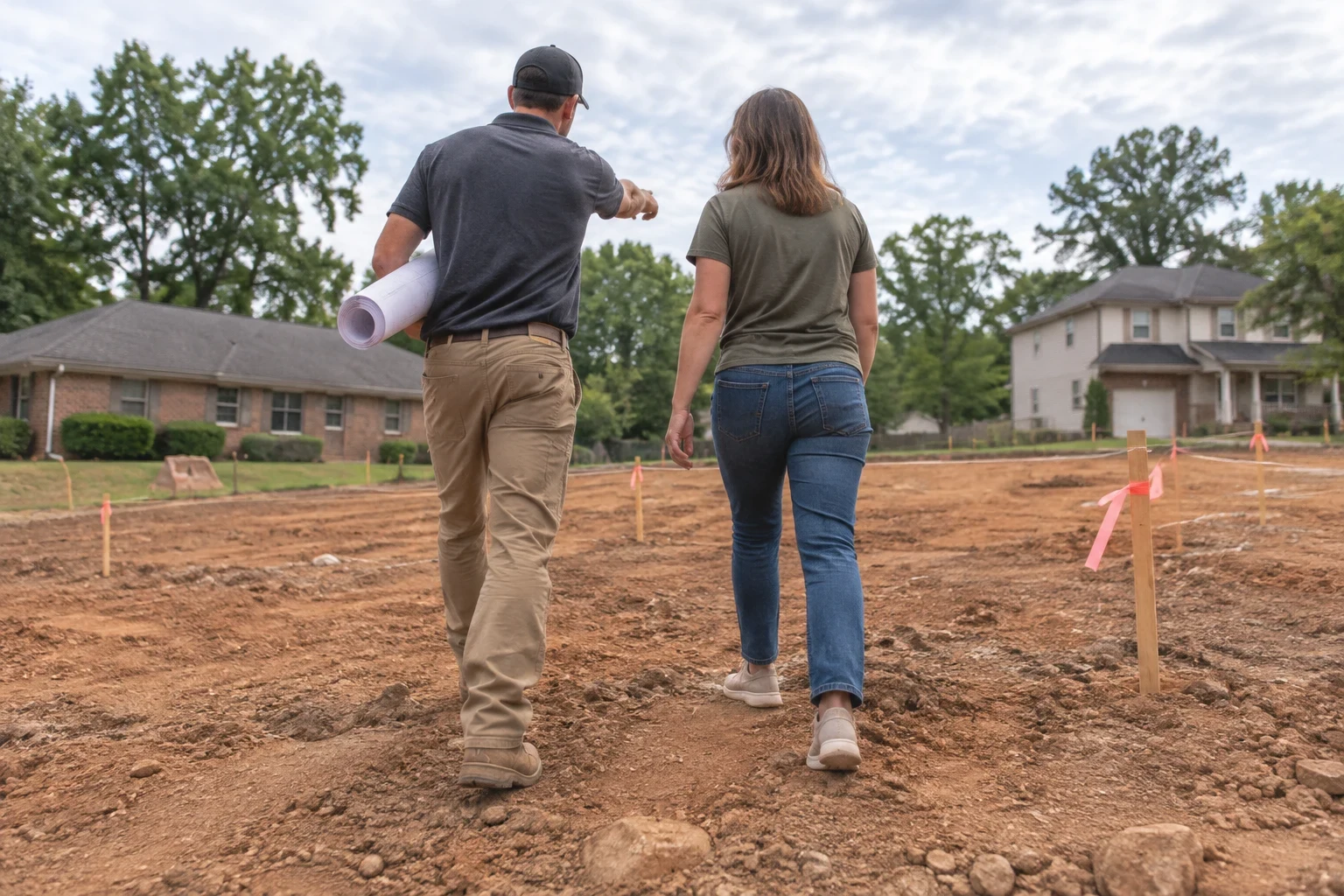
We go room to room, take moisture readings, check below where possible and go over material choices. Your written estimate lists every part of the work.
- 2
Getting the house ready
Furniture that stays gets covered, doorways get plastic sheeting and our walking paths get protected. Wood flooring arrives ahead of time so it can adjust to the house.
- 3
Removal and subfloor repair
The old floor comes up and you get photos of whatever is underneath. If the damage goes further than we expected, we pause and talk it over with you before any extra work.
- 4
Installation and wrap-up
The new floor goes down, trim and transitions go on, and we clean at the end of every day. Last, we walk the floor together and explain how to care for it.
What changes the price
Square footage is only part of a flooring price. The condition under the old floor often counts for more. Each piece of the job gets its own line on your estimate, so the numbers are easy to follow.
- Which material you pick
- Material and labor costs swing widely between solid hardwood, engineered wood, vinyl plank and tile. Per square foot, tile is the slowest to set.
- What the subfloor looks like
- Flat, dry plywood is the cheapest starting point. Rot, water damage or framing fixes add work, and some of it only shows once the old floor comes up.
- Tear-out and room shape
- Old tile and glued-down floors come up slower than carpet. Stairs, closets, odd angles and lots of doorways mean more cuts.
- Moving things out of the way
- Shifting heavy furniture, appliances and built-ins takes labor. Empty rooms cost less to finish.
Flooring questions we hear
Can you install new flooring right after water damage?
Not until things are dry. We measure moisture in the subfloor and framing, and if readings are high, the area needs to dry out first. Putting a floor down over wet wood is how you get buckling and mold a few months later.
Will you work with my insurance company after a leak or storm?
We can document what we find with photos and a written breakdown of the repair, which helps when you talk with your insurer. Your adjuster decides what's covered. We just give you clear information to work with.
Should I pick hardwood or vinyl plank?
Hardwood can be refinished and lasts decades, but it doesn't like standing water. Vinyl plank handles spills and humidity better, which is why many people use it in kitchens, baths and laundry rooms. We'll tell you honestly what fits each room.
Do I need to move out during the work?
Usually no. We work room by room when we can and keep the dust contained. Some glue-down floors and tile need a day before you walk on them, so we plan around that with you.
Can you do flooring as part of a bigger project?
Yes. We handle flooring inside home remodeling jobs and custom home building, and we can fix foundation work or framing problems we find underneath along the way.
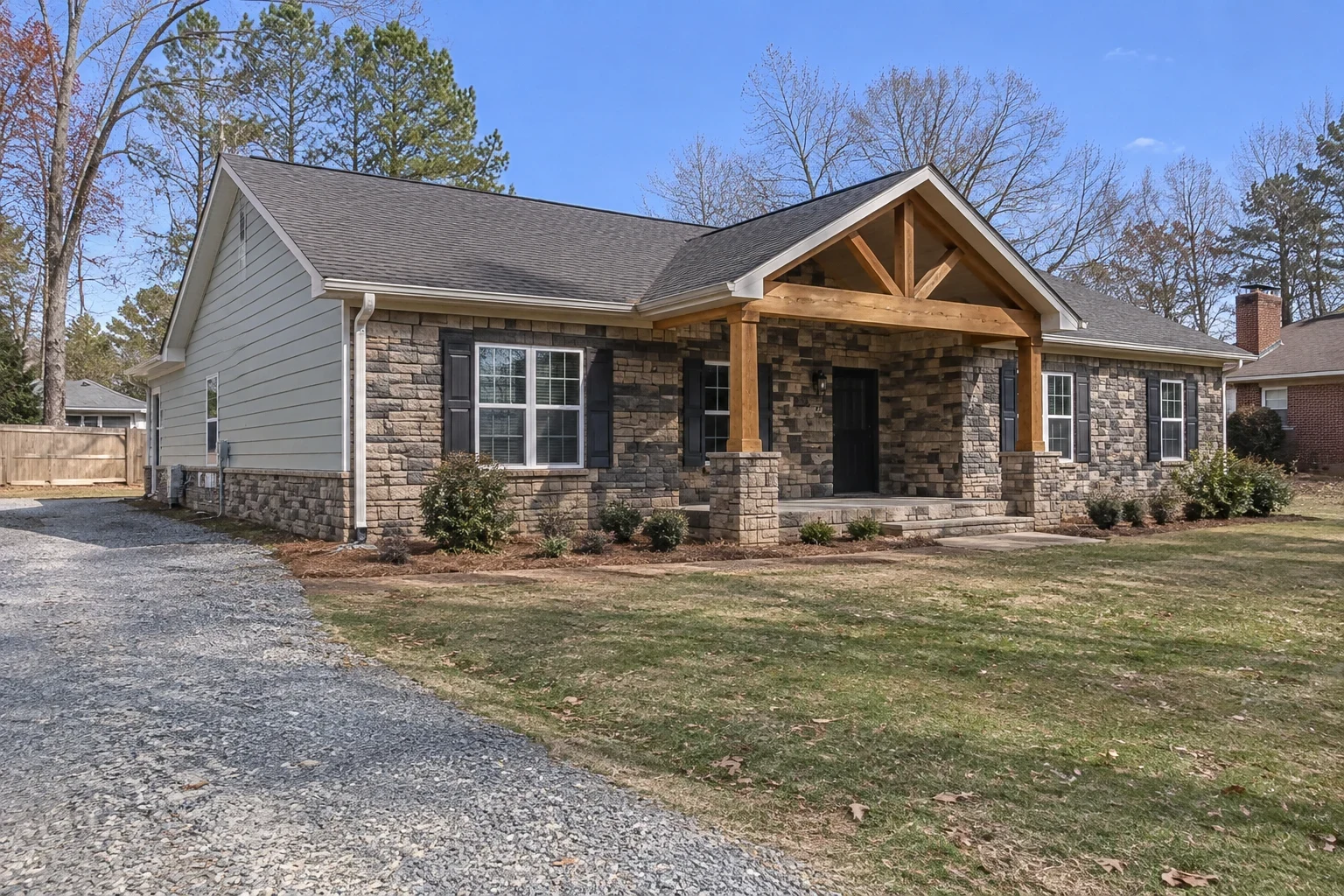
Get your floors done right the first time
Tell us what's going on with your floors, whether it's a remodel or damage from a recent leak. We'll come look underneath and give you a straight answer.