ServicesLand Clearing
Land Clearing in Gastonia
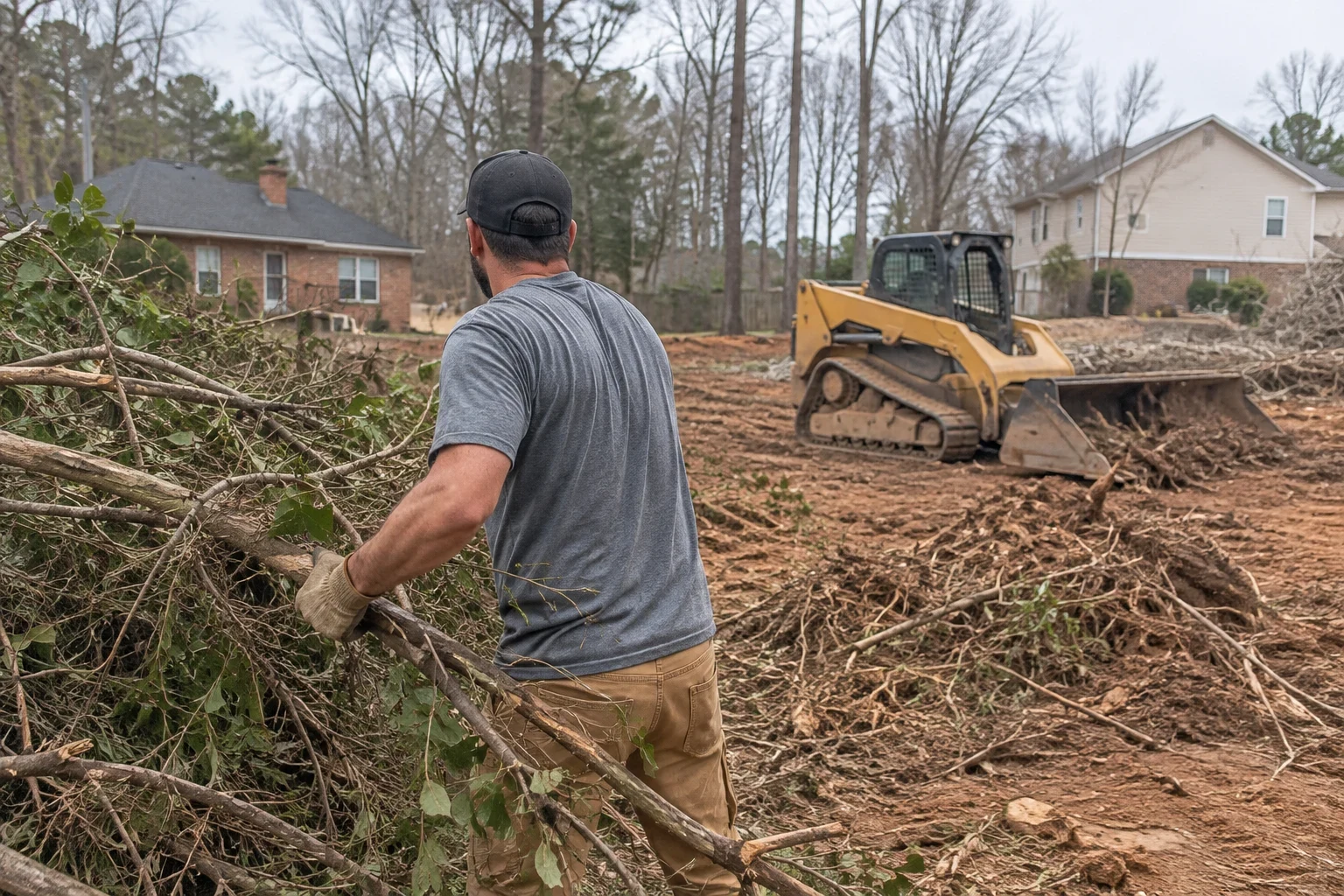
We clear trees, stumps and brush so your lot is ready for a foundation, a driveway or an addition. After a storm, we take down damaged trees, haul off the debris and leave the ground in shape for the next step of the work.
Clearing done with the build in mind
Land clearing is the first real work on most new home sites. We cut what needs to go, pull stumps where the house, driveway and septic field will sit, and keep the trees you want to save. A clean footprint matters. Buried roots rot over time and leave soft spots under a slab or footing.
Sometimes a storm changes the plan. A hard summer thunderstorm can drop pines across a lot or leave hardwoods split and leaning toward the house. We walk the property, tell you what is safe to leave and what has to come down, and take photos you can share with your insurer. Then we clear it in an order that keeps the rest of the project moving.
If your lot also needs grading or foundation work, we plan those jobs together so the ground only gets torn up once.
What our land clearing covers
- Tree removal
- We take down standing trees, including ones leaning or cracked after high wind. Trees near a house, fence or power line get cut in sections so each piece lands where we want it.
- Stump and root removal
- Inside the building footprint we pull the stump and the main root ball, not just grind it flush. Outside the footprint, grinding is usually enough. You will know which is happening where.
- Brush and undergrowth
- Vines, privet, briars and saplings get cut and cleared. That lets you see the lay of the land and walk it with your surveyor or designer.
- Storm debris cleanup
- Broken limbs, uprooted trees and tangled tops get cut up and hauled away. We work from the house and road outward so access opens up first.
- Hauling or chipping
- We haul debris off the lot, or chip it on site if you want mulch for beds and paths. We decide that with you before the first cut.
- Protecting trees you keep
- We flag the trees you want to save and keep heavy equipment off their root zones. Packed soil over the roots is often what kills a saved tree a year or two later.
Signs it is time to clear your land
You are ready to build
Your floor plan is picked and the survey is done. The lot has to be open before anyone can stake corners or dig footings.
Trees came down in high wind
Downed or uprooted trees block access and hide damage underneath. Clearing them comes first, before anyone can judge the ground or the house.
A tree is leaning or split
A tree that shifted in soaked soil or lost a big limb can fail in the next wind. Get it looked at before it picks where to fall.
Overgrowth is taking the lot back
Land that sits a few years fills in with saplings and vines fast. It gets harder to clear every season you wait.
An addition or new driveway is planned
Adding a room, a garage or a longer drive often means taking out trees close to the existing house. That calls for careful cutting, not just a dozer.
What drives the price of clearing a lot
No two lots are alike, so we walk yours before we price it. The written estimate splits out cutting, stump work and hauling so each cost is easy to see. These factors change the total the most.
Acreage and thickness
Size counts, but how thick the growth is counts more. Young pine comes down quicker than a stand of mature oak and hickory.
How big the trees are and what's around them
A large tree with open ground around it can be felled whole. Put that tree over a roof or a line and it has to be taken down piece by piece, which means more time and a bigger crew.
Pulling stumps or grinding them
Pulling stumps and roots from under the footprint costs more than grinding, but a foundation needs it. Grinding everywhere else holds the price down.
Getting rid of debris
Hauling all of it away runs higher than chipping part of it on the lot. Large cleanup loads add up quickly.
Slope, access and ground conditions
Steep slopes, narrow gates and wet red clay restrict the equipment. After a heavy rain we may hold off a few days to keep from rutting the lot.
The steps of a clearing job
- 1
Walk the property with you
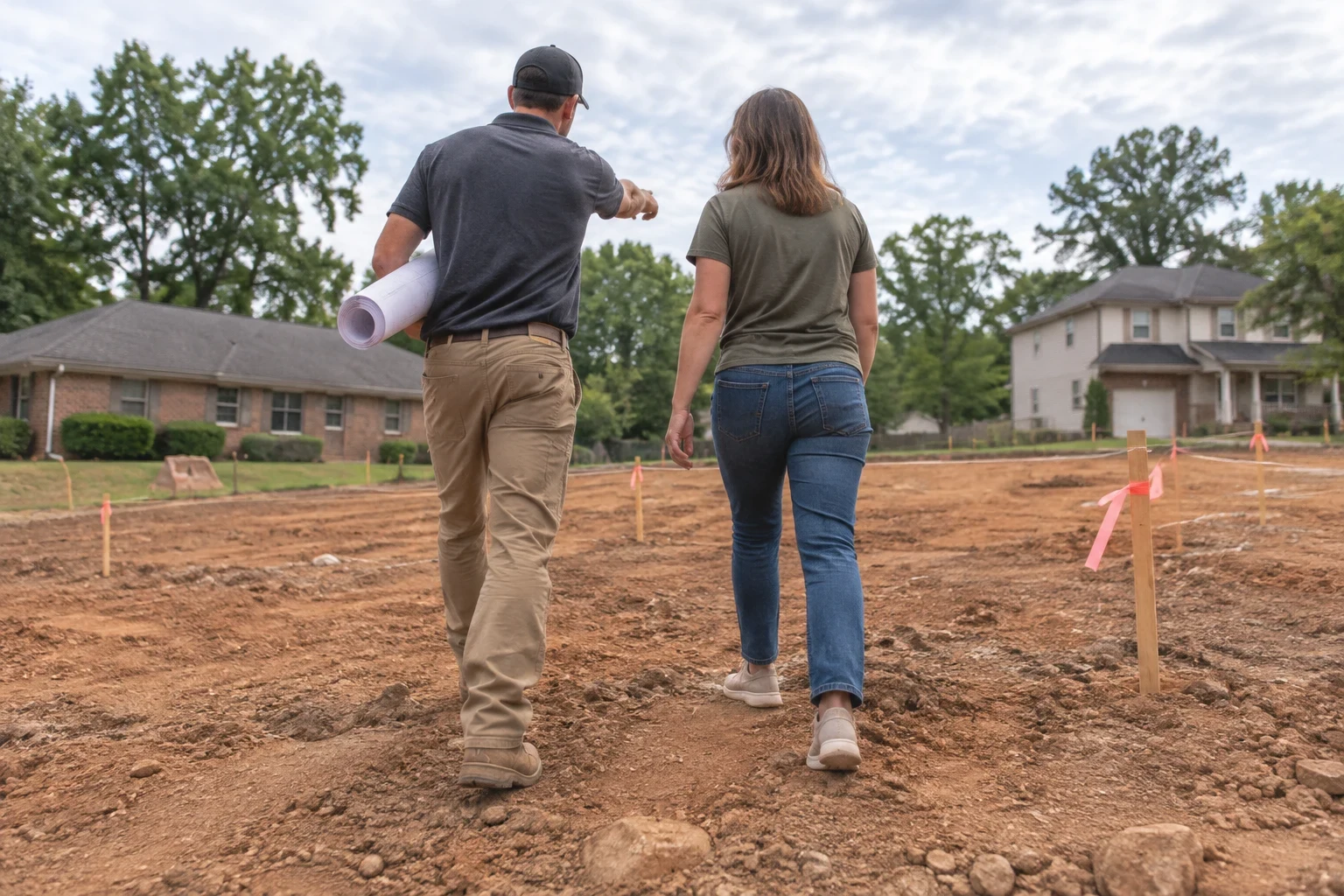
Together we walk the land, mark out where the build goes and flag any trees you want kept. Wind or water damage gets noted and photographed as a hazard.
- 2
Sort out access and permits
We decide how machines get onto the lot and where the debris ends up. Bigger clearings may call for an erosion control plan and silt fence, and you'll hear at the start if yours does.
- 3
Cut, clear and handle stumps
Dangerous trees go first, followed by everything else in the footprint. Each stump is pulled or ground depending on what will be built over it.
- 4
Clean up and turn it over
We haul off or chip the debris, fill the stump holes and leave the ground roughly level for grading. Before leaving, we walk the lot with you.
Common questions about clearing land
Will clearing my lot require a permit?
That comes down to how much ground gets disturbed and where the property is. North Carolina usually requires an approved erosion and sedimentation control plan once clearing reaches an acre or more, and some towns add tree rules of their own. Before we start, we find out which rules cover your lot and explain any effect on timing.
Trees fell on my property in a storm. Where do I start?
Keep clear of anything in contact with a power line and call the utility about it. Snap your own photos and report the damage to your insurer. We can come walk the land, sort out what has to come down right away and what can sit, and hand you photos and a written scope for your insurer. Coverage isn't our call, but we'll lay out the work in plain terms so your talk with the adjuster goes smoothly.
Is it possible to keep some trees?
Yes. On the walk-through we mark the trees you'd like to keep and fence around their roots. Ones sitting close to the house or footings are tough to keep alive, and we'll be straight with you when a tree probably won't survive.
Do my stumps need grinding or pulling?
Stumps under the house, garage, driveway or a planned addition should come out along with their main roots, because decaying roots sink and can crack a slab down the road. In the yard or the woods, grinding below grade is usually fine.
What comes after clearing?
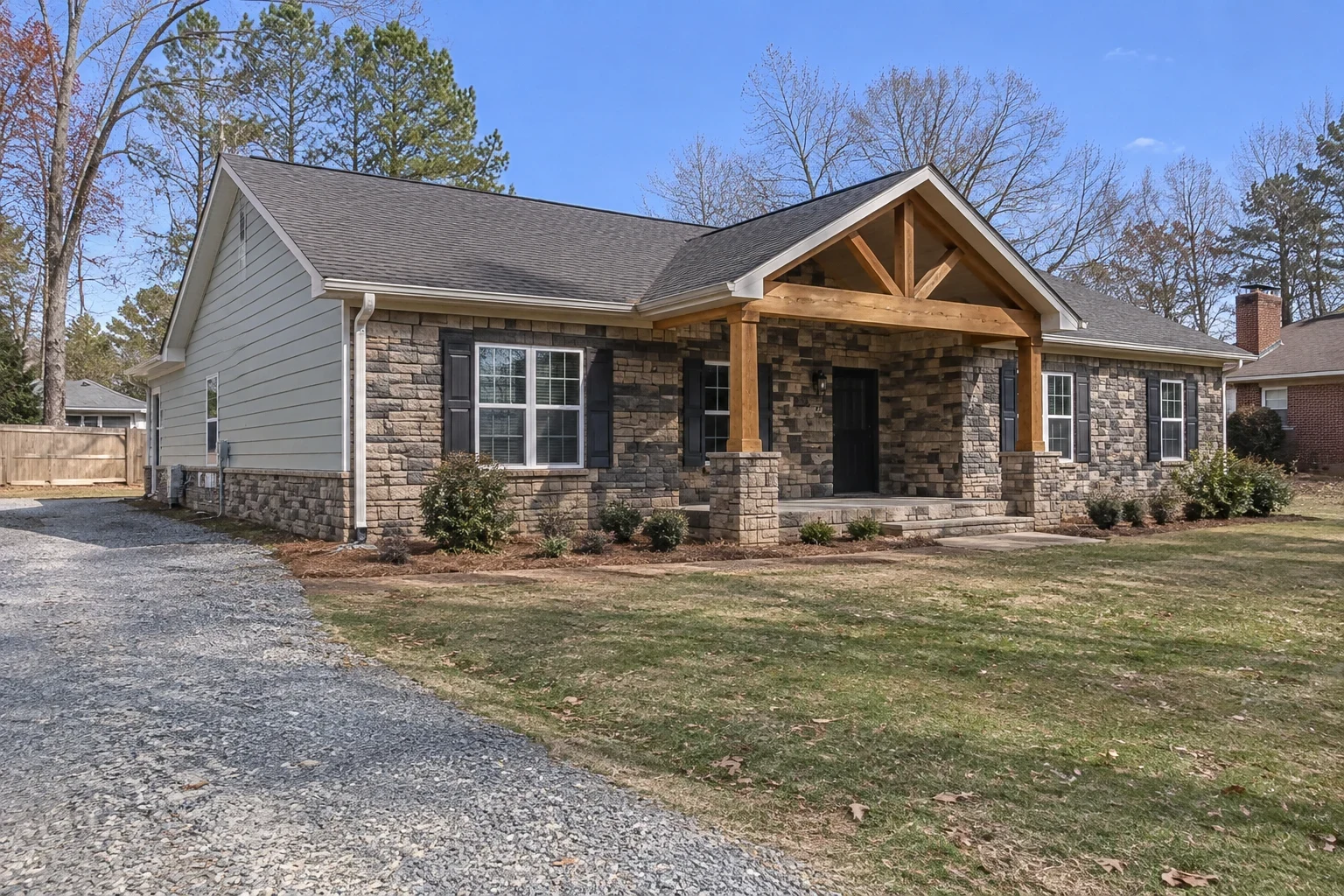
Most lots move right on to grading and then foundation work. We handle both, so the crew already knows where stumps were pulled and where fill was placed. For a new home, the next stop is custom home building.
Get your lot ready for what comes next
Tell us about your land, a wooded lot waiting on a build or a yard full of fallen trees. We will set up a project consultation, walk the property with you and lay out the clearing plan in plain words.