ServicesGrading
Grading in Gastonia
We shape your lot so rain runs off and away from the house. That covers a level pad for a new build and fixing a yard after a hard storm left ruts, puddles or water creeping toward the foundation.
What grading does for your lot
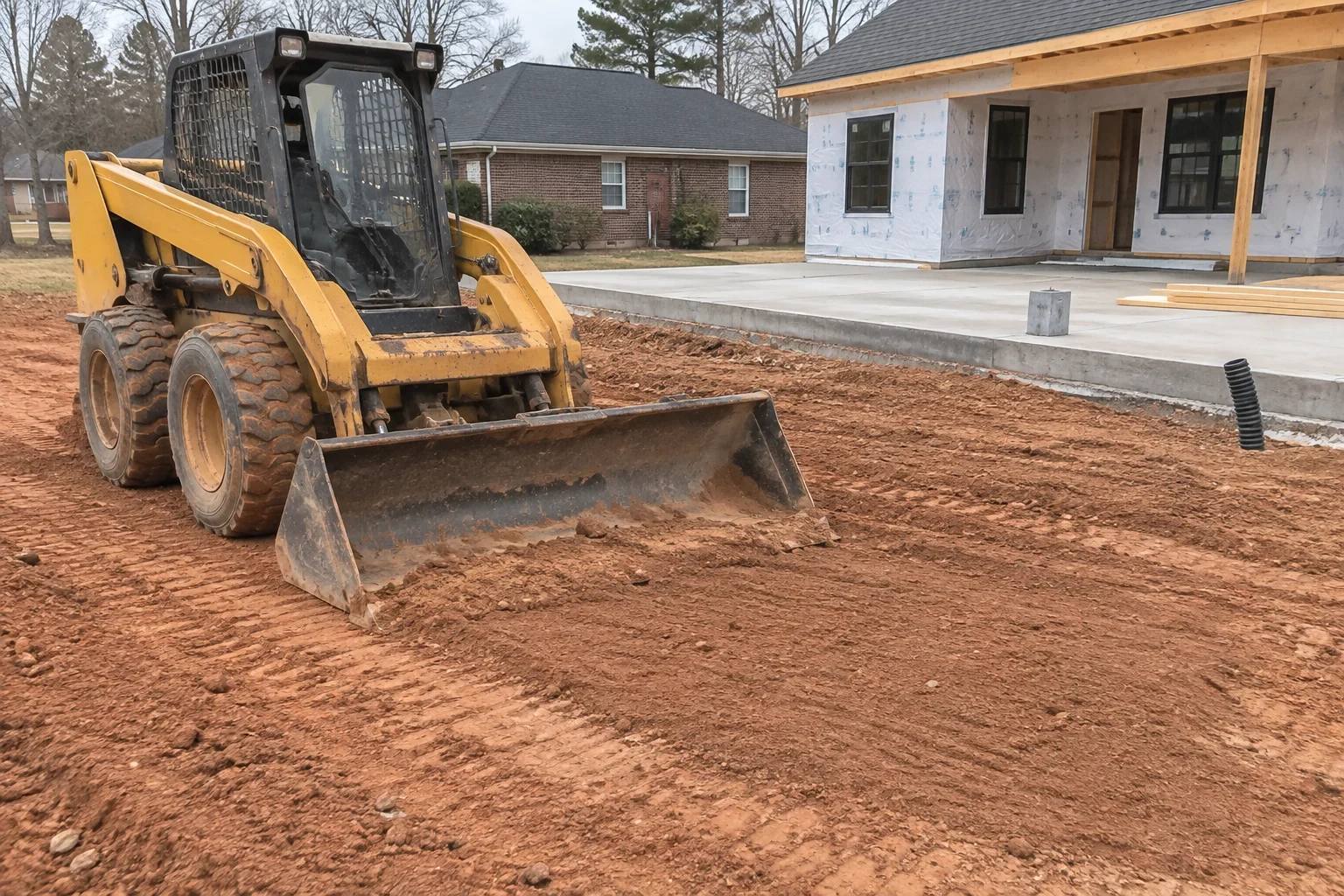
Grading is moving dirt on purpose. We cut high spots, fill low ones and set a slope so water has somewhere to go. On a new build, it gives us a flat, packed pad for the foundation and a plan for where the runoff ends up. On an existing home, it fixes the spots where water sits or flows the wrong way.
The red clay that sits under most yards around here sheds water fast when it is packed and turns slick when it is loose. That is why one heavy rain can carve a gully in a single afternoon. Good grading works with that soil, not against it.
If a storm just tore up your yard, the first job is to look before anyone starts pushing dirt around. A quick fix in the wrong direction can send the next rain straight into your crawl space.
What the work includes
- Site walk and slope check
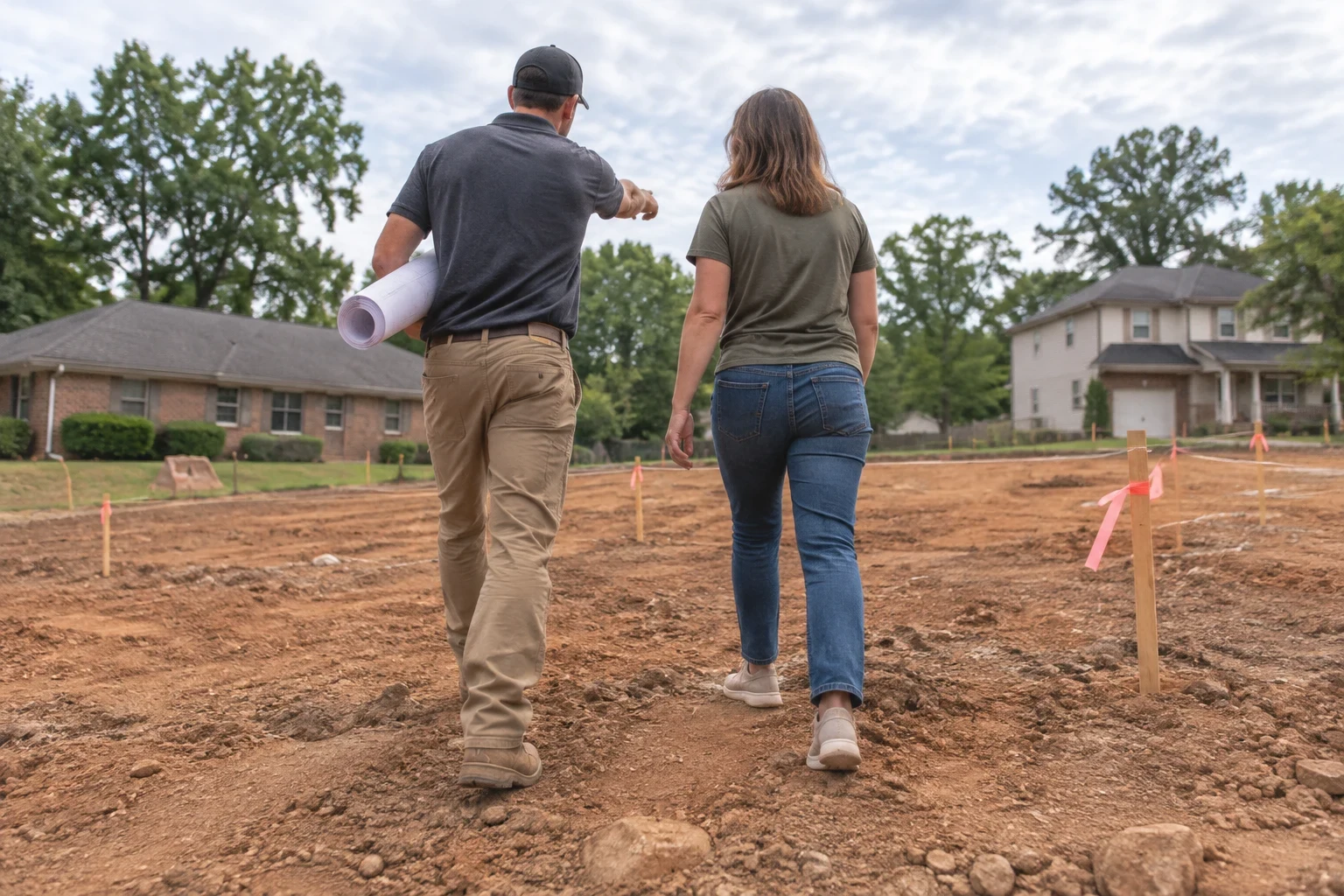
- We walk the lot, mark the high and low points and watch how the ground falls toward the house, the street and the neighbors. You see what we see before any plan is set.
- Rough grading
- Machines cut and fill to bring the lot close to final shape. On a new home site, this is where the building pad gets set and packed in layers.
- Slope away from the foundation
- We set the ground so it falls away from the walls for the first several feet. That one detail keeps a lot of water out of basements and crawl spaces.
- Swales and runoff paths
- Shallow channels carry water around the house and off the lot. We plan where they go so the water does not just land on the next yard over.
- Finish grading
- We smooth the surface, pull rocks and roots and leave it ready for seed, sod or landscaping.
- Erosion control while we work
- Silt fence and stabilizing bare soil keep mud from washing into the street or a creek if it rains mid-job. Larger disturbed areas may need an erosion control plan, and we will tell you up front if yours does.
How to tell your lot needs grading
Puddles next to the house
Water still pooled against the foundation a day after rain means the ground tilts toward the house. Given time, that water works its way into cracks.
New ruts or gullies
Channels washed into the yard mark where runoff is carving its way through. Each hard rain cuts them deeper.
A crawl space that smells musty or feels damp
Dampness under the house often traces back to the grade around it. Correcting the slope usually costs less than fighting moisture afterward.
Dirt washing onto the driveway or walks
Red mud on the driveway after each heavy rain is your yard sliding downhill bit by bit.
Sunken fill near the foundation
Around newer homes, backfill can settle in the first few years and leave a low ring that traps water. Some light regrading fixes it.
How a grading job runs
- 1
Consultation and site visit
You call, we talk through what you are seeing, then we come out and walk the lot. After storm damage, we take photos so you have a record of how things looked.
- 2
Written plan and estimate
We lay out where dirt moves, where water will go and what the job needs, line by line. If fill dirt or a permit is needed, it is on the paper.
- 3
Machine work
We bring in equipment, protect what stays, and cut and fill to the plan. We work in layers and pack fill so it does not settle later.
- 4
Check the fall
Before finishing, we check the slope with a level and, when we can, watch how water runs off. Then we fine grade and clean up the drive and walks.
What moves the cost of grading
Grading is priced on the dirt that has to move and how hard it is to reach. A small regrade around one side of a house is a different job from setting a pad on a sloped wooded lot. We walk the site before we put a number on paper.
- How much dirt moves
- Cutting a steep slope or filling a deep low spot takes more machine time. If fill has to be hauled in, that adds material and trucking.
- Access for equipment
- Tight side yards, fences and mature trees may mean smaller machines or more hand work.
- Soil and what is underneath
- Rock, buried debris or soft wet clay slow the work. Sometimes bad soil has to come out before good fill goes in.
- Drainage add-ons
- Swales are simple. Some lots also need pipe or a place for the water to go, which takes more work.
- Permits and erosion control
- Bigger disturbed areas can need an erosion control plan and inspections. We pull what is required and list it in the estimate.
Grading questions we hear
Something not covered here? (704) 486-2183
Should I fix storm washouts right away?
Fix the worst of it soon, but do it with a plan. Throwing loose dirt in a gully usually washes out again in the next rain. We look at where the water came from first, then grade so it stops cutting the same path.
Do you do grading before building a new home?
Yes. Grading is part of getting a lot ready for a custom home. It usually comes after land clearing and before foundation work, and we plan all three together so the pad, the slope and the drainage line up.
Will grading tear up my whole yard?
It depends on the job. A regrade along one wall stays in a narrow strip. Larger work leaves bare dirt, so we finish grade at the end and leave it ready for seed or sod.
How long does grading take?
Small regrades can take a day or two. New home sites take longer, and wet weather can stop work, since pushing soaked clay makes a mess and does not pack well. We give you a realistic schedule at the estimate.
Do you work outside Gastonia?
Yes. We grade lots around Gastonia and nearby towns like Belmont, Dallas, Stanley and Kings Mountain. Ask when you call and we will tell you if your property is in our area.
Send the water where it belongs
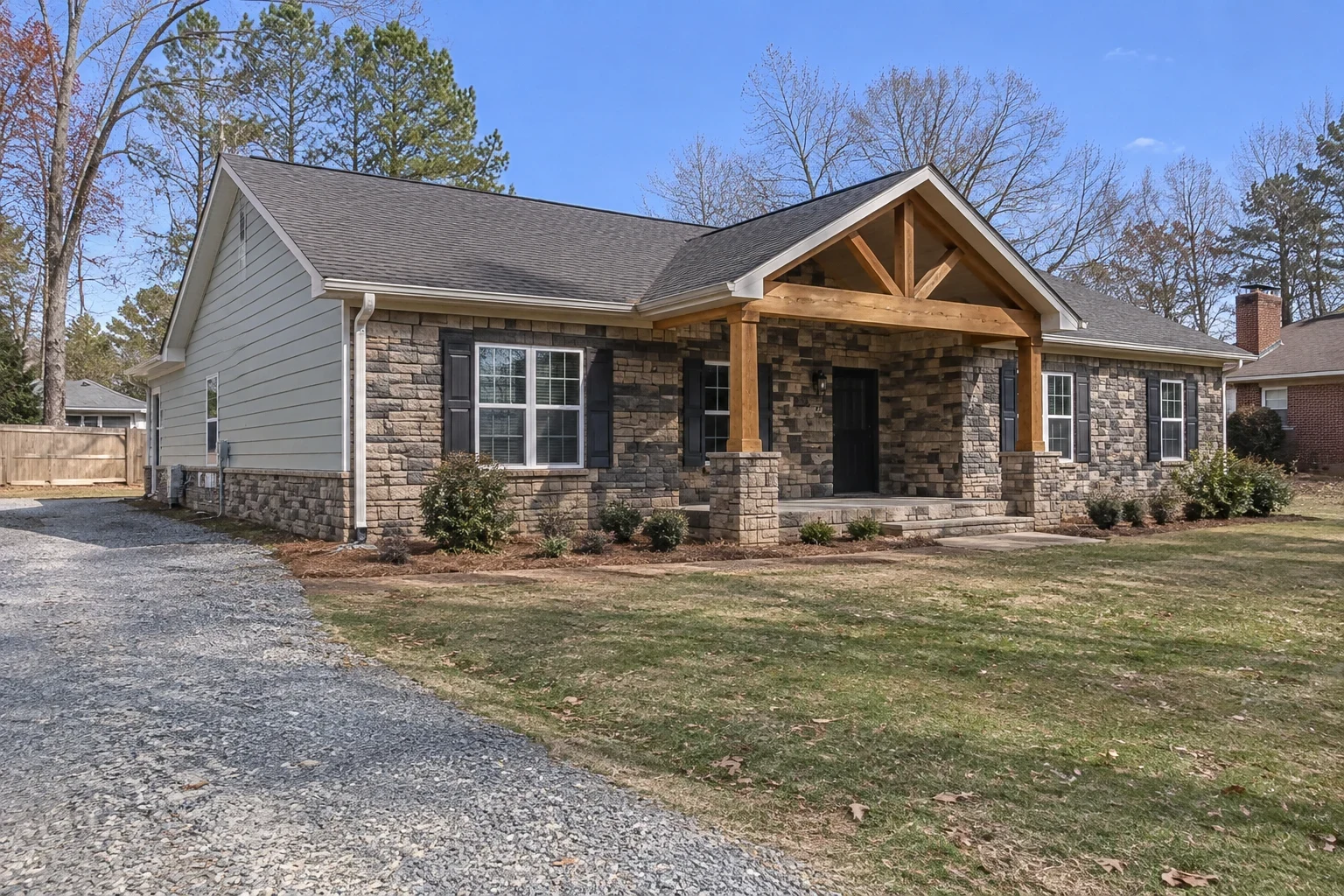
Let us know what the rain did to your property, or what you plan to build there. We'll schedule a walk of the lot with you and go over your options.